1919
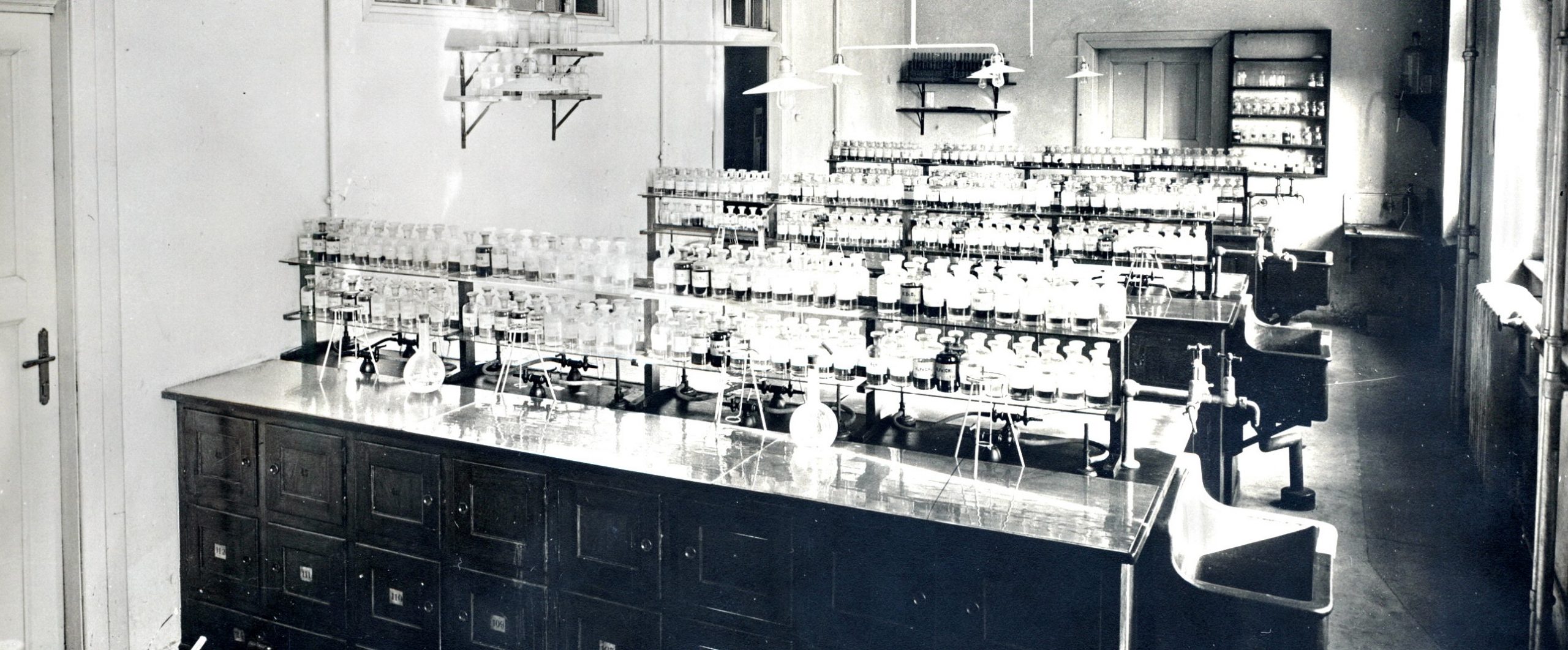
After the establishment of the University of Agriculture in 1919, its activities were divided between two departments: agricultural and forestry. The agricultural department (the predecessor of the Faculty of Agricultural Engineering, whose activities were later continued by the Faculty of Agronomy) also included the Chemical Institute, which was founded in the same year as the University of Agriculture itself. Together with its successor, Mendel University in Brno, the institute therefore commemorated the centenary of its existence this year as well.
The founder and first head of the Chemical Institute was Prof. Dr. Eng. Josef Knop. With the exception of a short interruption during the period of occupation, the Institute of General Inorganic, Organic, and Analytical Chemistry I provided chemistry education until 1951.
1922
The year 1922 can also be considered the beginning of scientific research in chemistry at the University of Agriculture. Research activities focused on antimony oxides, specifically on refining the relative atomic weight of antimony, and later on redox indicators for analytical chemistry. Attention was also devoted to the use of spectral analysis methods, especially spectroscopic analysis of dyes, whose significance was fully appreciated only in subsequent years.
Just five years after the start of his research activities, Prof. Knop received the award of the Czechoslovak Academy of Sciences and Arts from the Wiehl Foundation. Prof. Knop also made a lasting mark on the university as an academic official: in the academic year 1925–26 he served as Dean of the Agricultural Department, in 1932–33 as Rector of the University of Agriculture, and in 1952–53 as Dean of the Faculty of Agronomy.
1945
During the liberation battles, the institute’s premises were damaged by a grenade explosion, resulting in the near-complete destruction of the spectral laboratory, which had been operating since 1923. Thanks to a generous grant from the Ministry of Agriculture, the laboratory equipment was restored to such an extent that it became the best-equipped laboratory among all universities in Czechoslovakia at that time.
The spectroscopic laboratory also provided services to industrial enterprises and thus became the first workplace within the University of Agriculture to conduct what would today be termed applied research.
1951
In 1951, institutes with closely related professional orientations were merged, leading to the establishment of departments. Within the Department of Chemical Technology, the institute—now designated as chemical—was joined by the Institute of Agricultural Technology, the Institute of Lactology, the Institute of Fruit and Vegetable Technology, and the Institute of Agrochemistry.
1953
In 1953, both technological institutes separated and became an independent department. The Institute of Lactology was transferred to the departments of the Faculty of Zootechnology, and the Institute of Agrochemistry became part of the Department of Crop Production. The successor department was now named the Department of Chemistry.
Following the introduction of biochemistry and physical chemistry as independent teaching subjects, two new institutes were incorporated: the Institute of Biochemistry (briefly transferred to the Veterinary Faculty) and the Institute of Physics and Physical Chemistry.
1957
After Prof. Knop retired in 1957, the new head of the department became Associate Professor, later Professor, RNDr. Karel Marek. Two years later, following the establishment of the new Faculty of Business and Economics, the department became part of its organizational structure.
1959
In 1959, the department was renamed the Department of Chemistry and Physics. The internal structure remained divided into three institutes: the Chemical Institute, the Biochemical Institute, and the Institute of Physics and Physical Chemistry.
Historical Overview
The Chemical Institute has the longest tradition. Upon the establishment of the University of Agriculture, two institutes were designated for chemistry: the Institute of Inorganic and Organic Chemistry, led by extraordinary professor Dr. Eng. Josef Knop, and the Institute of Analytical Chemistry, led by extraordinary professor Dr. Eng. Rudolf Hac.
The primary task of the Chemical Institute was to ensure chemistry teaching from the very first semester of the new university. The highest priority was given to building adequate facilities for laboratory instruction. Initially, only two capacity-insufficient rooms were available for general and analytical chemistry, lacking both gas and water connections.
After two years, these basic deficiencies were resolved, and the institute was equipped with its own furniture, instruments, and a professional library containing essential literature. After one year in Brno, Professor Hac returned to his previous position at the Czech Technical University in Prague, leaving the position of head of analytical chemistry vacant.
Subsequently, the institute was divided into the Institute of Qualitative Analytical Chemistry, attached to the Institute of General Chemistry, and the Institute of Quantitative Analytical Chemistry, attached to the Institute of Agrochemistry. Until the occupation of Czechoslovakia, the Institute of General and Analytical Chemistry I operated under modest conditions in five rooms located on the raised ground floor of the left wing of the main university building at 1 Zemědělská Street. After the arrival of fascist forces in Brno, the institute was first closed and later relocated to the premises of the Brno branch of the Czech Technical University.
Biochemical Institute
The second of the three institutes of the Department of Chemistry and Physics was the Biochemical Institute. After biochemistry was introduced as an independent subject, the institute provided instruction in biochemistry at the Faculty of Forestry and both agricultural faculties—the Faculty of Agronomy and the Faculty of Zootechnology. It also ensured teaching of all chemistry subjects except physical chemistry.
Its research focused on methodological issues of potentiometric and chromatographic determination of L-ascorbic acid (vitamin C), monitoring its stability in solutions, and determining its content in plant material, particularly identifying apple varieties with high vitamin content for nutritional purposes.
The institute also developed several low-current instruments, such as a high-frequency titration device and an automatic titration relay, which found industrial applications. It further modified the design of a vacuum-tube polarograph and improved the properties of deflection-type laboratory potentiometers.
Institute of Physics and Physical Chemistry
The Institute of Physics and Physical Chemistry was established in the academic year 1950–51, when physical chemistry was introduced as a separate subject. Teaching was entrusted to RNDr. Josef Žák, who initially worked as an external lecturer and was later appointed State Associate Professor in physics and physical chemistry.
In 1954, he transferred from the Research Institute of Animal Nutrition of the Czechoslovak Academy of Agricultural Sciences to the University of Agriculture. Research activities focused on developing reliable physical and physico-chemical methods suitable for serial determination of trace elements in forage crops and for serial determination of calorific value of feeds in agricultural research, control, and testing.
1962
Following the independence of the Institute of Physics and Physical Chemistry in 1962, a separate Department of Physics was established.
1964
A separate Department of Biochemistry was established. The remaining department was renamed the Department of Chemistry. A branch of the University of Agriculture was established in Jihlava, including a Jihlava Department of Chemistry led by Eng. Vojtěch Štajgr. Cooperation between the two chemistry departments focused primarily on teaching.
Research at the Department of Chemistry built on previous stages, particularly through the application of analytical methods to soil and biological materials and the development of suitable methods for determining trace elements in these materials.
1970s
Due to organizational changes, the independent Jihlava department became a branch within the Brno department, jointly providing instruction in Brno and Jihlava for all faculties. After Professor Marek, the department was led by Associate Professor Ing. Lubor Vacek, CSc.
During this period, major renovations were carried out. Separate laboratories for teaching staff and research were established, a physical chemistry laboratory was created, student laboratories were modernized, and the departmental library received its own space. Teaching quality was improved through specialization of instructors across subjects and faculties.
Research focused on feed degradation as a function of storage time and preservation methods, and on monitoring element and compound contents in forest ecosystems, resulting in the development of suitable analytical methods.
1980s
In 1980, biochemistry was incorporated into the newly organized Department of Chemistry and Biochemistry, which was transferred from the Faculty of Business and Economics to the Faculty of Agronomy. The department was led by Associate Professor Ing. Lubor Vacek, CSc., and consisted of approximately 23 staff members across Brno and Jihlava.
Research focused on ecology, particularly the influence of environmental conditions on biochemical and physiological systems of wild animals and the impact of anthropogenic emissions on nutrient content in forest and grassland ecosystems.
Toward the end of the 1980s, societal changes led to the transformation of departments into institutes. Professor Dr. Eng. Jiří Pavel, DrSc., became head of the Institute of Chemistry and Biochemistry and also served as Vice-Rector for Construction and Development. During his tenure, the institute’s facilities were renovated, and two new student laboratories were built. Research focused on current ecological projects with national and international impact.
1990s
After Professor Pavel’s retirement, the institute was led by Professor RNDr. Vlastimil Kubáň, DrSc. Drawing on experience from Masaryk University and international stays, he secured funding from various grant agencies.
Research focused on the development of instrumental analytical methods and their application, including identification and determination of natural compounds in biological material, analysis of metal ions, inorganic anions, low-molecular organic acids, and speciation analysis in environmental samples.
Teaching expanded significantly due to increased student numbers, serving three faculties. Specialized courses and electives were accredited, laboratories were modernized, two new laboratories were built, and doctoral studies were further developed.
Early 21st Century
In 2004, RNDr. Petr Hrdlička, CSc. (Associate Professor since 2006) became head of the institute, continuing the established concept. Teaching was adapted to accreditation changes, a seminar room for 24 students was established, and staff numbers increased.
Research directions expanded, including the development of analytical methods (FI–CE with C4D detection, HPLC–AFS), chromatographic and extraction techniques, plant metabolite research led by Prof. RNDr. Bořivoj Klejdus, Ph.D., and electrochemical methods at the interface of chemistry, biochemistry, and molecular biology, led by emerging researchers such as RNDr. Vojtěch Adam.
2012 – Present
In 2012, Associate Professor RNDr. Vojtěch Adam, Ph.D. (later Professor) became head of the institute. Between 2012 and 2019, the institute was restructured to reflect new research challenges and a rapidly growing staff exceeding 100 employees.
Research focuses on advanced biological chemistry, including bioanalytical chemistry, algal and plant biotechnologies, experimental microbial and animal biochemistry, smart nanomaterials, non-invasive diagnostics, targeted drug delivery, antimicrobial materials, and microbiome research.
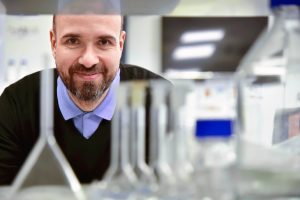
Teaching covers undergraduate and doctoral studies across three faculties of MENDELU, with strong involvement in Chemistry and Food Technology and Molecular Biology and Biotechnology programs.
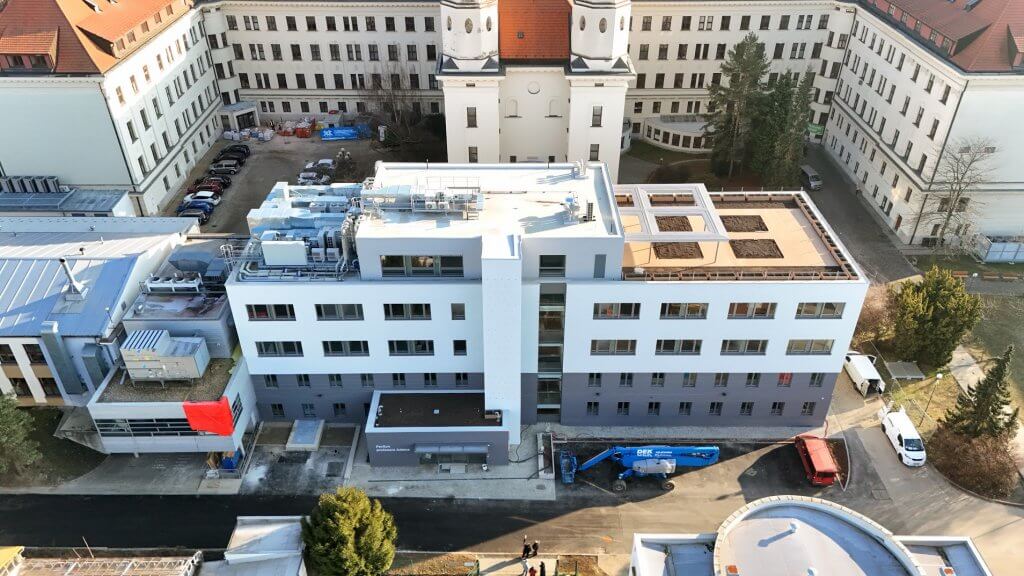
Professor RNDr. Vojtěch Adam, Ph.D., passed away on 21 May 2024 after a short but serious illness. He was succeeded by Associate Professor Mgr. Zbyněk Heger, Ph.D., who has continued to build high-quality and internationally competitive research. In 2025, the реконstructed Building D was officially opened and named the Vojtěch Adam Pavilion, providing modern facilities not only for cutting-edge research but also for high-quality educational activities.
Conclusion
One hundred years of the Institute of Chemistry and Biochemistry have been marked by numerous changes and restructurings. The wish for the next century is that all future interventions in structure and management will support continued development. This requires enthusiastic and motivated staff and students—the true soul of the institute.
The text was prepared based on a manuscript by Associate Professor RNDr. Petr Hrdlička, CSc., A Brief History of the Department of Chemistry and Biochemistry of the Faculty of Agronomy, University of Agriculture in Brno (1986).